
Mixed-Use Zoning in Dholera: What It Allows and What to Verify

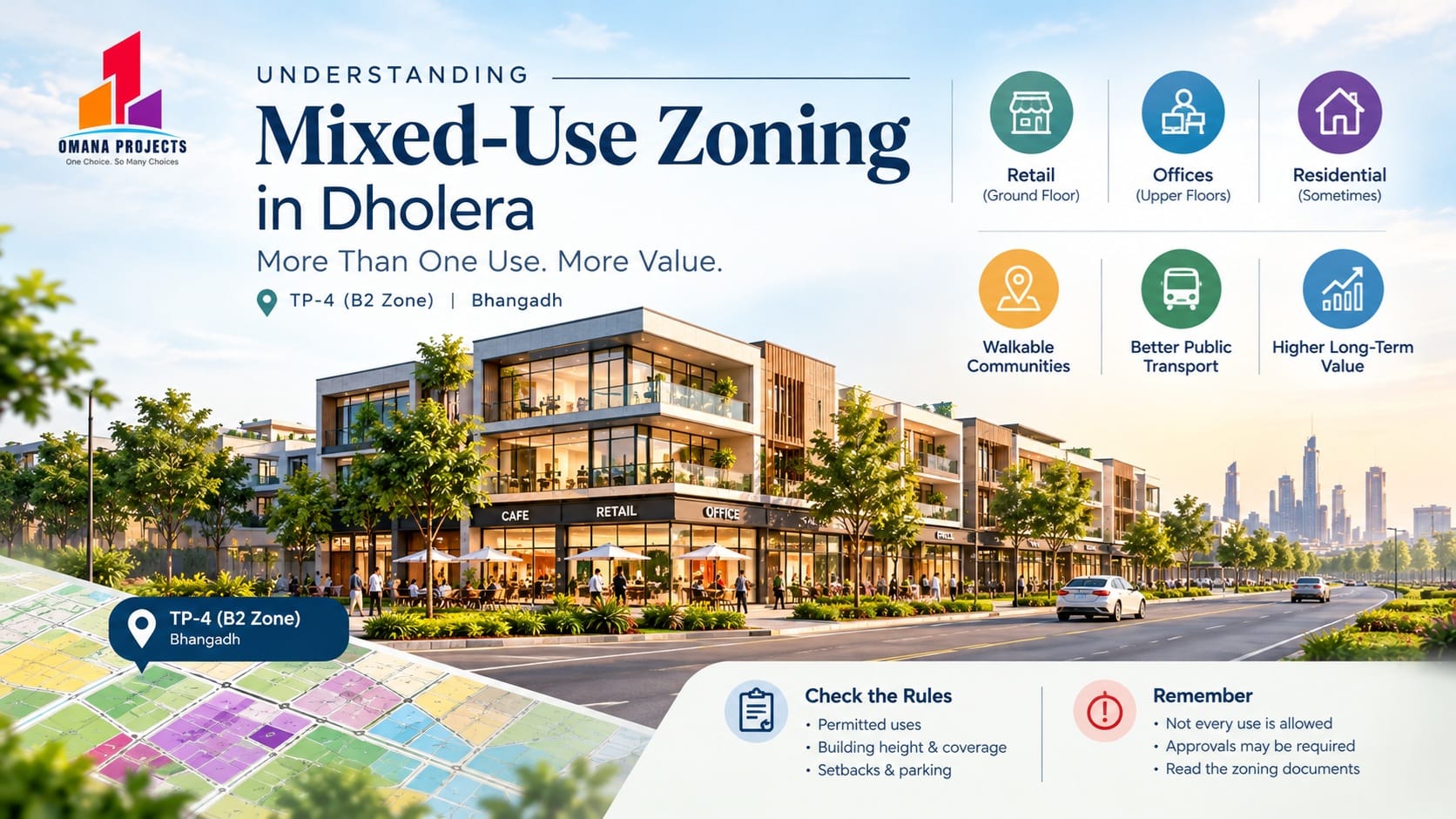
Mixed-use zoning is one of the most widely mentioned and least understood terms in Dholera property listings. It appears alongside plot names and prices, suggesting flexibility and opportunity. But what exactly does it permit, what does it restrict and how should a buyer verify it? This guide explains mixed-use zoning in plain language, using the kind of plots offered in TP-4/B2 at Bhangadh as reference points.
What Is Zoning?
Zoning is how a planning authority decides what each parcel of land may be used for. Zones commonly cover residential, commercial, industrial, public facilities and open space. Each zone has rules on permitted uses, building height, coverage and setbacks.
In Dholera SIR, zoning is set through the Town Planning schemes and the development plan, and administered by DSIRDA. It shapes what you can build and run on your plot, and often what the plot is worth.
What Does Mixed-Use Mean?
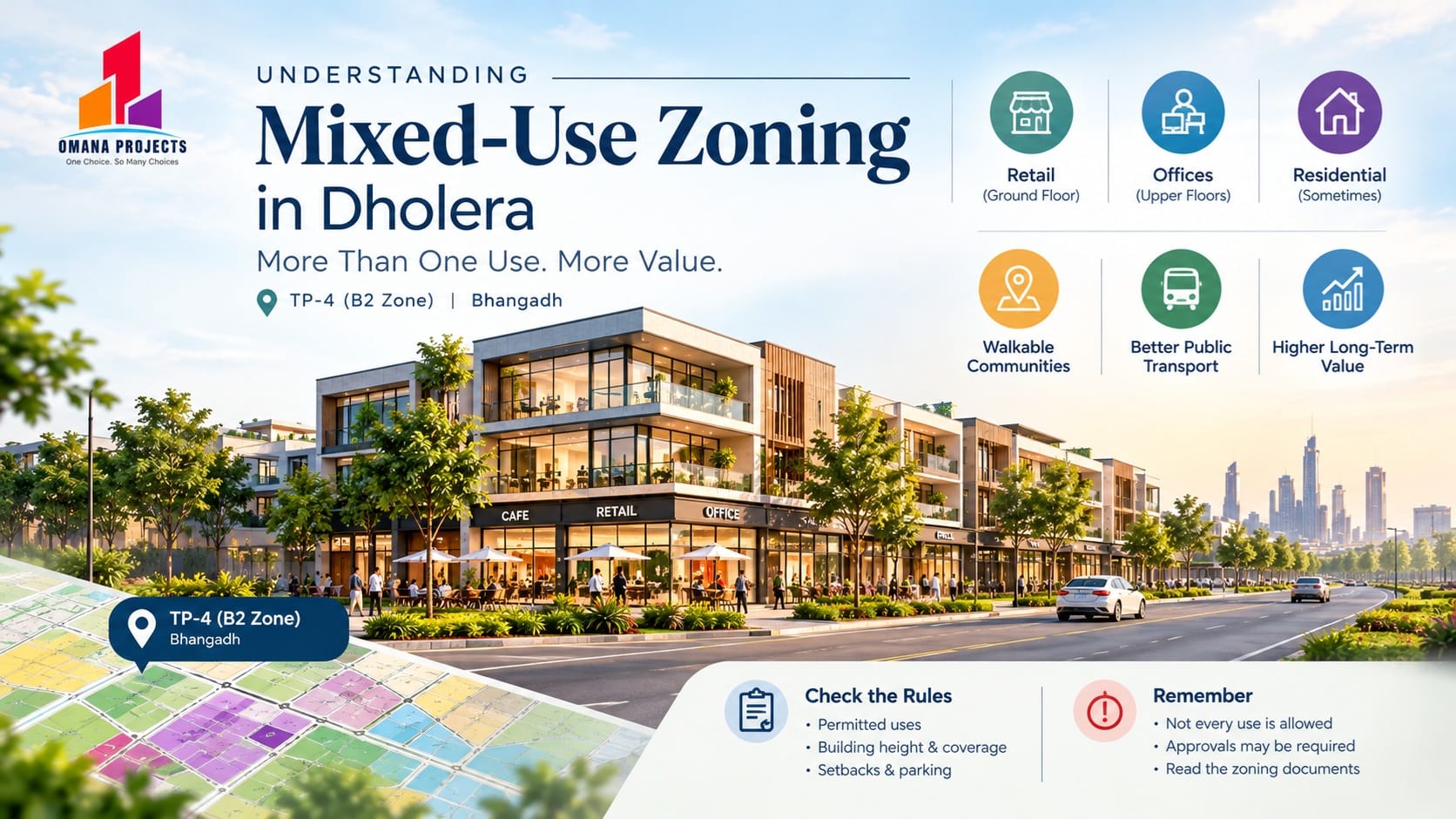
Mixed-use zoning allows more than one type of activity within the same zone, and often within the same building. For example, shops on the ground floor, offices above, and in some cases homes on upper floors. The idea is to create lively, walkable areas where people can live, work and shop close together.
Omana Projects' SCO scheme Ridhi 966/1 is described as having mixed-use zoning in TP-4 (B2 Zone), with frontage on a 70-metre road.
Why Planners Favour Mixed Use
Planners promote mixed use for several reasons:
- It reduces travel because daily needs are close by.
- It keeps streets active throughout the day.
- It supports local businesses with a steady customer base.
- It makes efficient use of land and infrastructure.
- It supports public transport by concentrating people along routes.
In a new city, mixed-use zones around transit corridors are a core tool for building a lively urban centre.
What Mixed-Use Does Not Automatically Allow
It is a mistake to read mixed-use as permission for anything. Rules still apply:
- Some uses may be prohibited, such as heavy industry or hazardous activities.
- The proportion of residential to commercial space may be limited.
- Building height, floor area and setbacks remain controlled.
- Parking and fire-safety requirements apply.
- Certain uses may need specific approvals.
Ask for the permitted-use list for your zone and read it carefully. Do not assume an activity is allowed because a salesperson says so.
Benefits for Plot Owners
Mixed-use zoning can give owners flexibility. You might begin with commercial uses and later add residential space, or lease different floors to different kinds of tenants. A building that can adapt as the neighbourhood changes tends to be more resilient than one tied to a single use.
Flexibility has a price. Mixed-use plots often cost more than plain residential plots, so check that you will use the flexibility you are paying for.
Challenges to Consider
- Noise and activity: commercial uses can generate noise and traffic, which may affect residents.
- Management complexity: several uses in one building demand careful planning of access, services and security.
- Timing: commercial demand may lag behind population growth.
- Regulatory detail: rules can be intricate and may be updated.
These challenges are manageable with good design and legal advice, but they are real.
How to Verify Mixed-Use Zoning
- Ask for the TP scheme number, zone designation and sanctioned plan.
- Request the written list of permitted uses and development norms.
- Check the documents with a lawyer or planning professional.
- Confirm with the relevant authority if anything is unclear.
- Keep copies of the zoning documents with your title papers.
Our step-by-step guide to buying a plot in Dholera lists the documents to collect, and the TP zones guide explains how zones differ.
Frequently Asked Questions
What does mixed-use zoning mean? It allows more than one type of use, such as shops, offices and sometimes homes, within the same zone or building.
Can I build any business on a mixed-use plot? No. Only uses permitted for the zone are allowed, and some activities need approvals.
Is mixed-use always more valuable than residential? Not necessarily. Value depends on location, demand and what you can actually do with the plot.
Mixed-use zoning is a useful tool when you understand it. Read the rules, confirm your intended use and design with flexibility in mind.